

Cena:
30,00 €
+ brezplačna dostava

O avtorju
O avtorju
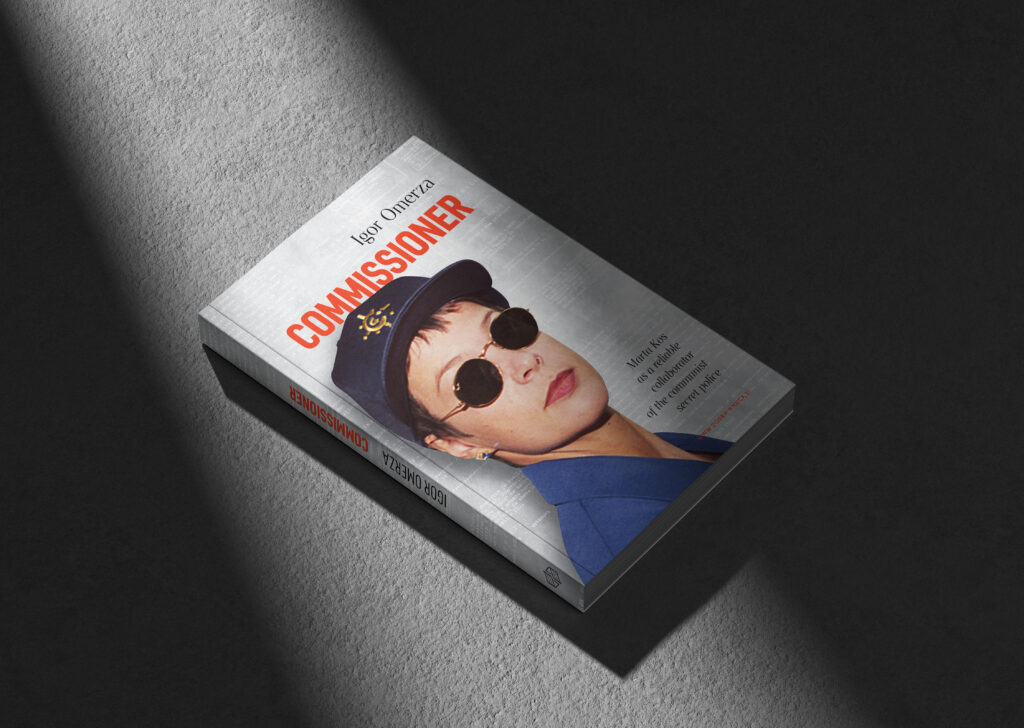
Marta Kos as a reliable collaborator of the communist secret police
The book has 183 pages with Index, Archival sources and Sources of numerous facsimiles of documents and photos.
Prologue: Me and Marta Kos
Chapter 1: Udba for beginners
Chapter 2: Marta Kos for beginners
Chapter 3: Struna – stalking of Alojz Lampret and RDW
Chapter 4: Marta Kos as TaraBlanka
Chapter 5: Marta Kos before Slovenian and European parliamentarians Epilogue: The importance of TaraBlanka’s disclosure

Let’s take a brief look at the contents of the book.
In the “Prologue” I explain how it came about that on May 31, 1988, secret police officer Jože Žakar took me in for questioning at the secret police headquarters. Why is this worth writing about in this book? Because later, the same secret police officer read classified reports in which Marta Kos appears as a registered source of the secret police with the code name Tara, and later as a registered collaborator of the secret police with the code name Blanka.
In the “first chapter” I explain the history, organization, methods, and means of operation of the Yugoslav secret political police, colloquially known as the Udba, and in this context, some of the peculiarities of the Slovenian branch of this secret police, especially its regional center in the northern town of Slovenj Gradec, where Marta Kos, alias Udba source Tara, was in secret contact with Udba officer Stojan Celin until March 1990. Since this center was abolished at that time, the last report by Marta Kos, alia Blanka, now a collaborator, preserved in the Slovenian archives, was produce at the Udba center for the city of Maribor.
In the “second chapter” I present in detail the educational, journalistic, political, and business career of Marta Kos, up to her appointment as a commissioner in the European Commission. The most interesting part of her career is her employment at RDW in Cologne.
It is interesting to compare what Marta Kos herself said about this job abroad in the media and what the Udba reported extensively about quite a bit lengthy process of obtaining this job. In this chapter I also mention what has long been known, namely that Marta Kos has a code number in the once-secret Central Active database as a registered source of the Udba. These records date back to 1987, and since we do not have records for other years, it is possible that she was registered as a source even earlier.
The “third chapter” is the most extensive because I found a lot of Udba documentation for it. Here, I write about the secret Udba analysis and informations of the Deutsche Welle radio station in Cologne and, in this context, about the surveillance of Alojz Lampret (kodno name of surveillance Struna), who was the head of the Slovenian section of this radio station. I also describe the work of numerous employees of this radio station who came from Slovenia and were “hired” by the Udba to report on this radio station. Why did I devote so much attention to this? So that readers of this book could better understand, firstly, the environment that Udba collaborator Blanka, that means Marta Kos, entered in the early 1990s, and secondly, how intensively Udba operated in West Germany.
In the “fourth chapter”, I quote in full the contents of all classified documents found in the Slovenian archives in which Marta Kos appears under code name Tara or as a collaborator with the code named Blanka or simply as Marta Kos. Given that approximately 90% of the Slovenian Udba archive has been destroyed, I can conclude that there were actually many more of these documents, not just ten, but perhaps a hundred or even more.
In the “final chapter”, I present in detail, in light of newly published secret Udba documents, the lies that Marta Kos told during the Commissioner’s hearings in the Slovenian and European Parliaments.
In the “Epilogue” I conclude that the public disclosure of these documents prevents any possible blackmailing of Commissioner Marta Kos with her unpleasant secrets, because from today onwards, they have been exposed!
Howgh, I have spoken.